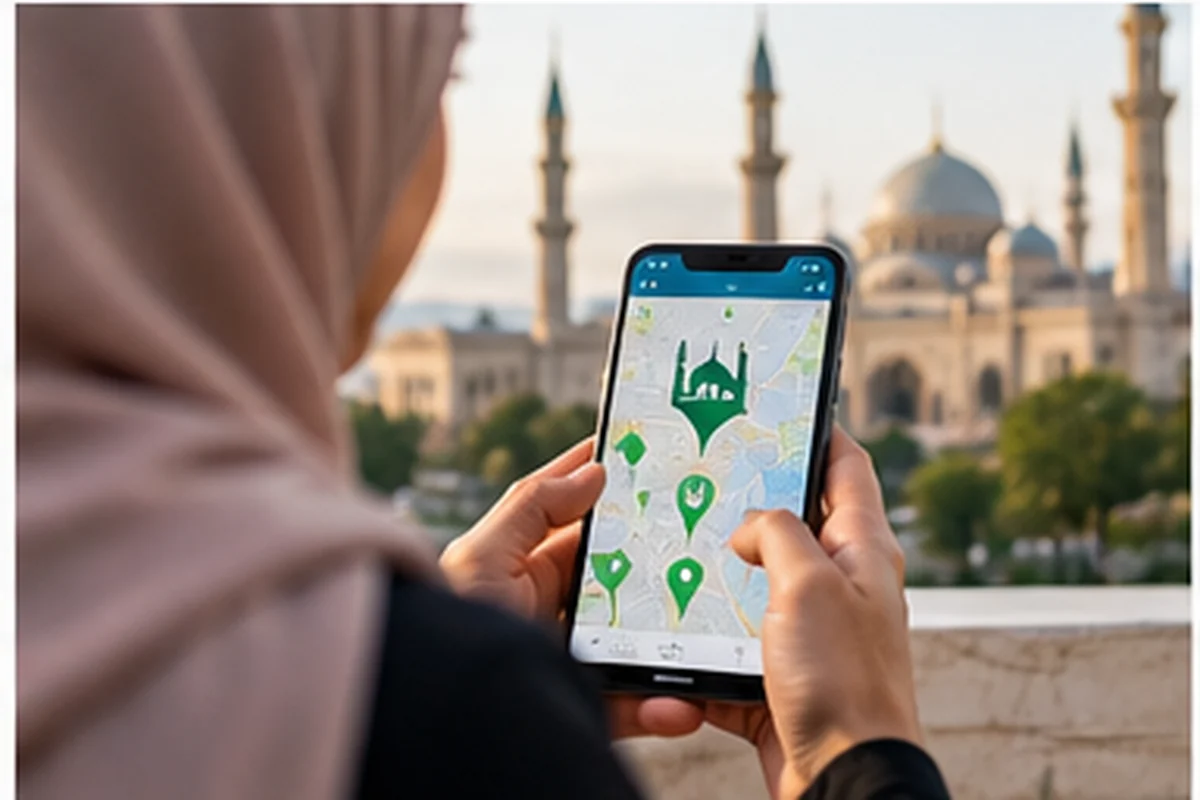
Travelling for the building
Architectural tourism puts a structure at the centre of the itinerary. The traveller follows a style, a period or an architect, and lets the route be decided by what stands where. Courtyards, domes, tilework and calligraphy become the programme.
For many Muslim travellers this has a double meaning. Some buildings are a pride of shared heritage, while others are still active places of worship, which changes how and when they can be visited.
Mosques that welcome visitors
The Sheikh Zayed Grand Mosque in Abu Dhabi has 82 domes and minarets of about 107 metres, according to its official site. Visitors are asked to pre-book an online access pass, while worshippers enter without a ticket. Free guided cultural tours are offered in Arabic and English.
The Hassan II Mosque in Casablanca stands on the seafront. Its minaret is 200 metres high and the prayer hall has a retractable roof. Non-Muslims are admitted by guided tour only, so a Muslim and a non-Muslim friend travelling together should check how each can enter.
Praying or visiting?
At large mosques, the worshipper's route and the visitor's route are often separate. A Muslim who wants to pray should use the entrance for worshippers, observe prayer times and avoid joining a tourist tour mid-prayer. A visitor who only wants to look should follow the guide's instructions.
Palaces, gardens and institutions
The Alhambra and Generalife in Granada form the Nasrid palace complex. The official site gives history, a description of the buildings, opening hours, online tickets and accessibility information. Because demand is high, tickets are best arranged through that site rather than through resellers.
In Paris, the Institut du monde arabe combines a museum, a library, Arabic courses and exhibitions on the Arab world, and its building is itself part of the visit. It is closed on Mondays. Such institutions are not mosques, but they offer a welcoming introduction to Arab and Islamic art and architecture.
Etiquette inside and outside prayer halls
Shoes come off before the carpet, and clothing should cover shoulders, arms and legs. Women normally cover their hair in active mosques, and many mosques lend robes or scarves at the entrance. Voices stay low and flash photography is often banned.
In palaces and museums, rules are about preservation rather than faith: no touching walls or tiles, no tripods without permission, and no stepping beyond ropes. Signs at each site take precedence over any general advice.
Ticketing, timing and crowds
Famous buildings fill quickly. Booking online, choosing early morning or late afternoon, and avoiding Friday midday at mosques that are in use for the congregational prayer all make a visit calmer. Many mosques close to tourists around the five prayers, and Friday hours may be shorter.
Keep a printed or saved copy of the booking, carry identification if the site asks for it, and read the cancellation terms. Prices and hours change, so rely on the official sites rather than blog posts.
Restoration and living heritage
Many monuments exist today because someone paid for their conservation. The Aga Khan Trust for Culture runs the Aga Khan Award for Architecture, the Historic Cities Programme and restoration projects in many countries, and says its Historic Cities Programme has completed over 350 restoration projects.
Its pages are a good starting point for travellers who want to see restored historic districts, gardens and fortresses, and to understand how a building is rescued as well as admired.
A final point concerns tickets for several buildings in one city. Some monuments sell combined or timed entries, and a mosque may be closed to visitors during the week of a major religious festival. Reading each official page the week before travel prevents a wasted morning.
A sample route and mistakes to avoid
A route can follow one thread, such as Andalusia, with Granada and the Alhambra as the anchor, or Morocco, with Casablanca as a start. Three buildings in three days is a realistic pace, with prayer and meals planned between visits and a rest in the afternoon.
The common mistakes are arriving without a ticket, dressing for the weather instead of the site, visiting a mosque in the middle of Friday prayer, taking photographs of worshippers, and trying to see too much. Halal food near monuments is better searched in advance, since the official sites do not describe it.
Travellers who like to understand what they see can read a short history of the building before visiting, and listen to the guide's commentary in a language they know. Details of calligraphy, geometry and tilework are far richer when someone explains their meaning.
Frequently asked questions
Can non-Muslims visit the same mosques?
It depends on the mosque. The Sheikh Zayed Grand Mosque admits visitors with a pre-booked online pass, and Hassan II Mosque admits non-Muslims only by guided tour. Always read the official visiting page, as rules are set by each institution.
What should I wear to visit a mosque?
Cover shoulders, arms and legs, avoid tight or transparent clothing, and be ready to remove shoes. Women usually cover their hair. Many mosques lend scarves or robes at the entrance, but bringing your own is simpler.
Is it better to buy tickets in advance?
Yes for the most popular monuments. The Alhambra's official site sells online tickets and mosques such as Sheikh Zayed ask for an online pass. Using the official site avoids resellers and gives accurate hours and accessibility information.
Can I pray inside a historic palace or museum?
Usually not, because they are not places of worship, and the official sites reviewed for this guide give no prayer facilities. Pray before or after the visit, or in a nearby mosque, and ask staff if a quiet space exists.
Useful organisations and links
- Sheikh Zayed Grand Mosque CentreOfficial site of the Abu Dhabi mosque, with the online access pass and free guided cultural tours in Arabic and English.
- Hassan II Mosque, CasablancaOfficial site of the seafront mosque, with information on guided visits for non-Muslim visitors.
- Aga Khan Trust for CultureRuns the Aga Khan Award for Architecture, the Historic Cities Programme and restoration projects in many countries.
Links to third-party organisations with no commercial tie to this site. Always check conditions with them directly.