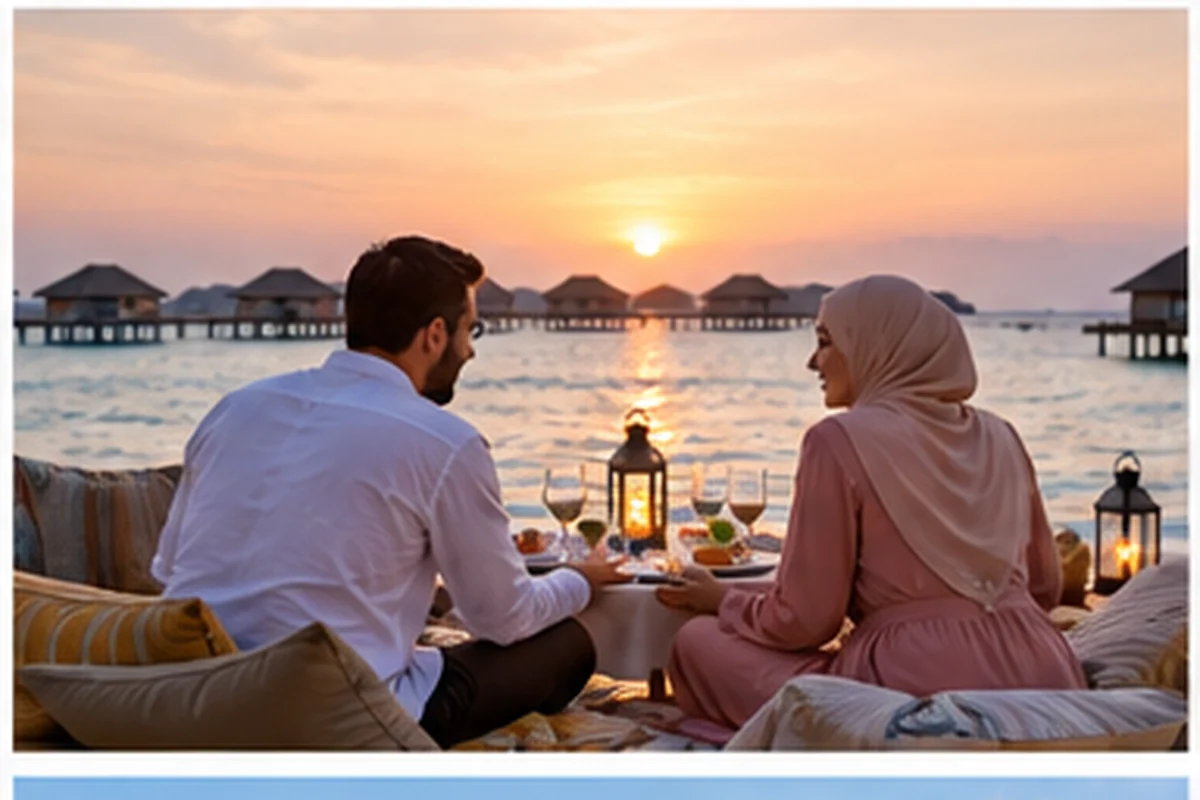
What people mean by a halal spa
There is no single definition and no widely recognised certificate for spas. When travellers say 'halal spa' they usually mean a combination of several things: men and women treated separately, therapists of the same sex, private or covered treatment rooms, no alcohol on the premises and products without ingredients they consider impermissible.
Because these criteria are chosen by each guest, the most reliable approach is to list your own requirements and ask the spa to confirm each one.
A useful distinction is between a spa that is merely quiet and one that has been set up around Muslim guests; only the second can usually answer your questions without hesitation.
The hammam tradition
The hammam, or Turkish and Moroccan bath, has a long history in Muslim societies as a place of washing and social life. Traditionally men and women use the bath at different times or in separate buildings, and bathers keep a cloth wrapped around the body.
In Spain, Hammam Al Ándalus runs Andalusian-style hammam and massage centres in Granada, Córdoba, Madrid, Málaga and Palma. Its website does not state whether it offers sessions reserved for one gender, so ask about this, and about mixed or private bookings, before choosing a time.
Gender separation and therapists
The question that matters most is who will be in the room. Ask whether the spa has separate areas or separate hours for women and men, whether a therapist of the same sex can be guaranteed and whether the treatment can be done privately as a couple or a family.
Ask for the answer in writing, with the date and time of the booking. A promise made at the reception on arrival is harder to honour if the rota changes.
- Separate sessions or separate floors for women and men?
- Same-sex therapist guaranteed or only 'on request'?
- Can the door be locked or the room closed during treatment?
Hotel spas and the rest of the hotel
Many travellers meet spas inside hotels. A hotel's spa may meet your needs while the restaurant or bar does not, so judge each part separately. Royal Mansour Marrakech, a luxury palace hotel with a spa, flags dishes containing pork on its menus, which shows why halal arrangements must be confirmed with the hotel and not assumed from the setting.
Ask about the pool and the changing areas as well as the treatment rooms, since the places guests pass through before a massage can matter as much as the massage.
Products, oils and ingredients
Some guests ask about the ingredients of oils, creams and soaps, in particular alcohol-based products or animal-derived ingredients. Spas can usually give a list, and a guest with a firm preference can bring their own oil.
Scholars and travellers hold different views on cosmetic ingredients, so there is no single answer to give. Each reader should follow their own school or scholar, and tell the spa clearly what they accept.
Dress, modesty and comfort
Modest swimwear, a robe and a towel are generally sufficient for a hammam or a pool. Women who wear a hijab can ask whether a scarf may be kept on during a facial or a massage of the back, or whether a separate room is available.
If the treatment requires undressing, speak to the spa beforehand rather than at the door. Reputable places expect these questions and are used to adapting.
Prayer and timing around a treatment
Check the time of the next prayer before booking, and avoid slots that will end just as the time runs out. Ask whether a quiet corner or a clean room is available for prayer after the bath, and whether you can perform ablution again after the treatment.
A late-afternoon booking often clashes with Asr, while an early-morning slot leaves the day free; for hotel guests, a treatment after the evening meal is easiest to combine with the prayers.
Red flags and a short checklist
Warning signs include vague replies, a refusal to put details in writing, 'halal' used as a slogan without explanation and staff who cannot say who will be present. Treat the label as a prompt to ask questions and not as proof.
A short checklist: gender separation, therapist, ingredients, alcohol on site, prayer space, cancellation terms and the exact time of the booking.
If a spa cannot answer these points, a simple alternative is a private hammam booking for the family, or a massage arranged in your own hotel room by a licensed therapist, where you control who is present.
Frequently asked questions
Is there a certificate for halal spas?
No widely recognised standard exists for spas. Some places use the word as a label, so ask what it means in practice: separate sessions, same-sex therapists, private rooms, alcohol policy and the ingredients of treatment products.
Do hammams separate men and women?
Traditionally yes, through different hours or separate buildings, but modern spas vary. Hammam Al Ándalus does not state gender sessions on its website, so confirm them with the centre before you book.
Can I choose a female therapist?
Many spas will arrange it if asked in advance, but it may not be guaranteed on the day. Request it at booking, ask for written confirmation and arrive early to confirm again with the reception.
Can a hotel spa be suitable if the hotel is luxury?
Possibly, but luxury is not the same as halal. Royal Mansour Marrakech, for example, marks pork dishes on its menus, so ask about the spa, the restaurant and the pool separately and obtain the answers in writing.
Useful organisations and links
- Hammam Al ÁndalusAndalusian-style hammam and massage centres in several Spanish cities; ask the centre about gender sessions and private bookings.
- Royal Mansour MarrakechPalace hotel in Marrakech with a spa; some menu items contain pork, so confirm halal arrangements when booking.
Links to third-party organisations with no commercial tie to this site. Always check conditions with them directly.