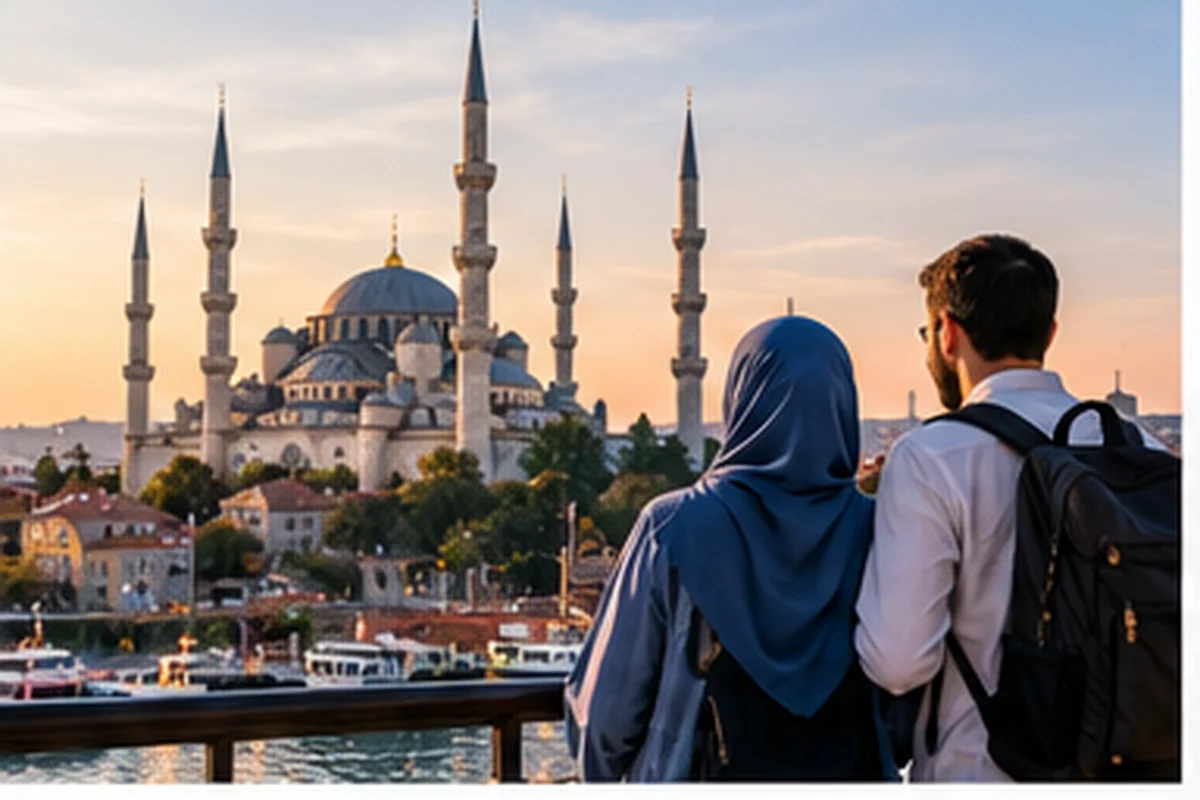
What halal and Muslim-friendly travel really means
Halal travel is a trip organised so that a Muslim can follow daily religious practice without constant compromise. In practice that covers food, accommodation, prayer, dress, leisure and the general atmosphere of a destination. The expression Muslim-friendly is broader and more cautious: it describes places and services that make an effort to accommodate Muslim guests, without claiming to be fully religious in character.
It is worth being clear about the limits. Neither term is a legal label in most countries, and no portal can certify a hotel, a restaurant or a whole city. A hotel that advertises itself as halal may mean a certified kitchen, or only that pork is not served. A destination described as Muslim-friendly may have many mosques and halal shops, yet still offer alcohol in public places. This site therefore gives you criteria, context and questions to ask, never guarantees.
How to evaluate a hotel before you book
The word halal on a booking page tells you very little. Ask precise questions and keep the answers in writing, ideally by email, so that you have something to refer to on arrival.
- Kitchen: is the meat certified halal, by whom, and is the kitchen shared with pork or alcohol preparation? Does breakfast include halal options clearly labelled?
- Alcohol policy: is alcohol served in the restaurant, only in a separate bar, or not at all? Is there a minibar, and can it be emptied or removed on request?
- Prayer: is there a prayer room, a qibla direction in the room, prayer mats, and a place for ablutions? If not, is there a mosque within walking distance?
- Pool, spa and beach: are there separate hours or areas for women and men, a covered family pool, or a private beach? Are modest swimwear rules accepted?
- Rooms: are connecting or family rooms available, are twin beds possible, and is a quiet floor available away from nightclubs and event halls?
Reading reviews with care
Reviews from other Muslim guests are useful, but check how recent they are and whether the same practices still apply under current management. Photographs of the prayer room or the breakfast buffet are better evidence than a general claim. Our pages on halal hotels, Muslim-friendly pools, spas, beaches and holiday clubs are written to help you compare on these points.
Eating well on the road: restaurants and food rules
Food is usually the first practical question. In Muslim-majority countries, halal is the default, but even there it is sensible to check the status of imported products, desserts with gelatine and dishes cooked with wine. In other countries, look for a visible halal certificate, a butcher who can explain the slaughter method, and menus that state the origin of meat.
Many travellers adopt a layered approach: halal meat where it is certain, fish and vegetarian dishes where it is not, and a short list of fall-back options such as a bakery or a grocery store. Cooking facilities in an apartment can solve the problem entirely. Our halal gastronomy theme explains how to read labels, which ingredients to question, and how to talk to a chef without causing offence.
Flights, halal meals and prayer on the move
Most airlines let you order a special meal in advance, and halal or Muslim meals are commonly offered, but the deadline is often 24 to 48 hours before departure. Confirm the request again at check-in, and carry some dry food in case a meal is missed. Some airlines publish their catering standards, and the airlines page of this site gathers practical points.
Prayer during a journey is easier when you plan around it. Check departure and arrival times against the daily prayer times, learn the rules for shortening and combining prayers that your own scholar or tradition recommends, and ask cabin crew politely for space if you need to pray on a long flight. Many large airports now have a prayer room or a quiet room, and a map of the terminal usually shows where it is.
Prayer times, qibla and mosques
Prayer times change with latitude and season, and the change is dramatic in northern countries, where summer days are very long and winter days very short. Use a reliable application or the local mosque timetable, and note which calculation method it follows, because methods differ by a few minutes to much more at high latitudes.
A pocket compass or a qibla finder helps in hotel rooms and rental flats. When you visit mosques as a traveller, dress modestly, remove your shoes and respect the times when visitors are not admitted. In countries where mosques are also major monuments, the page on mosques and Islamic sites explains visiting hours and etiquette for Muslim and non-Muslim guests.
Hajj and Umrah: an overview
Hajj is the annual pilgrimage to Mecca, an obligation for those who are able; Umrah is the lesser pilgrimage that can be made at other times. Both involve official procedures, visas, health requirements and authorised operators, and the rules are set by the Saudi authorities and by the authorities of your own country.
For this reason, our Hajj and Umrah page is an orientation, not a booking service and not a religious ruling. It lists the questions to put to an operator: what is included, how far the hotel is from the Haram, how groups are organised and what happens if a flight changes. Always check an operator's registration with the official body in your country before paying a deposit.
Families, women, couples and honeymoons
Family travel works best when children are considered from the start: connecting rooms, kids' menus with halal options, shaded pools and safe beaches. Women travelling alone or in a group often ask about transport, dress expectations, women-only spa hours and the reputation of a neighbourhood at night. Our pages on halal family holidays and on travel for Muslim women collect these practical points.
Couples and honeymooners usually look for privacy, a quiet setting and discreet service. Halal honeymoons and destination weddings are covered separately, with ideas for islands, mountain retreats and city breaks. Whatever the profile, read the hotel's own policy on unmarried guests and local customs before you travel, since rules differ widely from one country to another.
Budget, safety and fraud warnings
A halal trip does not have to be expensive. Self-catering apartments, shoulder-season dates, regional airports and city stays near a mosque can lower costs. The page on budget halal holidays shows where savings are realistic and where they harm comfort or safety.
Fraud deserves attention. Be wary of offers that use the words halal or pilgrimage to justify an unusually low price, demand full payment by bank transfer to a personal account, or refuse to give a company address and registration number. Check reviews outside the seller's own website, pay by a traceable method when possible, and keep every confirmation. For personal safety, read the travel advice of your government, take out travel insurance and keep copies of your documents; the pages on visas, insurance and travel safety go deeper.
Ramadan, Eid and special-interest travel
Travelling during Ramadan changes the rhythm of the day. Opening hours shift, restaurants may close until sunset, and evenings become lively with shared meals and prayers. Many travellers find it a rewarding time to be in a Muslim-majority country; others prefer to stay home and travel at Eid. Book early for the days around Eid, when flights and hotels fill quickly, and confirm local public holidays.
Beyond classic holidays, the site covers special-interest tourism seen through a Muslim traveller's practical needs: scuba diving, surfing, hiking, equestrian trips, fishing, northern lights, volcanoes, glaciers, gardens, castles, historic villages, traditional souks and UNESCO heritage. Each page explains what to look for in terms of modest clothing, prayer breaks and food, and says honestly where a destination is difficult.
How to use this site
The Menu button opens the navigation. By country lists the country guides, each with pages on holidays, hotels and a general travel guide for halal travellers. Types of halal travel groups the main formats: hotels, flights, cruises, camping, weekends, honeymoons, ski and luxury. Types of halal activity gathers the themed pages, from wellness and sport to heritage, nature and shopping.
The Search button finds a country, theme or guide by keyword, and the Languages bar switches the whole site into another of the 51 languages offered. The All pages link shows every page of your language in one place. The site is published by VP Limited in London and written by Nabil Frik. It is independent, takes no bookings and receives no payment from hotels. Details such as opening hours, prices, certificates and entry rules change, so always check them with the provider before you travel.
Frequently asked questions
Is a Muslim-friendly hotel the same as a halal hotel?
No. Muslim-friendly usually means the hotel makes reasonable accommodations, such as halal food options, a prayer room or a qibla marker. A halal hotel is a stricter claim, often with no alcohol and certified catering. Neither word is a guarantee, so ask the hotel about kitchen, alcohol, prayer and pool arrangements in writing.
Does this site take bookings or sell trips?
No. The site is an independent information portal run by VP Limited and written by Nabil Frik. It does not sell travel, does not act as an agent and does not take payments. Always confirm prices, conditions and certificates directly with the hotel, airline or operator.
How do I get a halal meal on a flight?
Order it through the airline when you book or in the manage-booking section, usually well before departure, often one to two days. Confirm again at check-in and carry some dry food in case the meal is not loaded. Menu names vary by airline, so look for halal or Muslim meal.
Can I rely on a prayer app for times and qibla?
A reputable app is a good tool, but check which calculation method it uses and compare with the local mosque timetable, especially in northern countries. For qibla, a compass or a second application is a useful cross-check, particularly inside metal-framed buildings.
How can I avoid fraud when booking Hajj, Umrah or a halal holiday?
Be cautious of very low prices, pressure to pay quickly, and payment to personal accounts. Check the operator's registration with the official body in your country, read independent reviews, ask for a written contract and pay by a traceable method. For pilgrimage, follow your national authority's instructions.
By country
Andalusia
Bosnia and Herzegovina
Indonesia
Quebec
United Arab Emirates
Types of halal travel
- Halal hotels
- Halal flights
- Halal cruises
- Specialist agencies
- Holiday clubs
- Halal weekend breaks
- Halal honeymoons
- Luxury halal travel
- Travel insurance
- Halal holiday stays
- Halal travel
- Holidays in Ramadan
- Airlines and halal meals
- World destinations
- Halal gastronomy
- Halal family holidays
- Travel for Muslim women
- Budget halal holidays
- Religious tourism
- Hajj and Umrah planning
- Islamic heritage travel
- Mosques and Islamic sites
- Muslim-friendly business travel
- Educational stays
- Visas and insurance
- Prayer while travelling
- Travel safety
- Responsible travel
- Apps and services
- Weddings and honeymoons
- Long stays and retirement
- Volunteer travel
- Family-roots travel
- Halal guide – Bosnia-Herzegovina
- Halal guide – Burkina Faso
- Halal guide – UAE
- Halal guide – Sierra Leone
- Halal guide – South Korea
- Halal guide – Costa Rica
- Halal guide – New Zealand
- Halal guide – Netherlands
Types of halal activity
- Swimming pools
- Halal spas
- Halal camping
- Halal ski holidays
- Muslim-friendly beaches
- Car sharing
- Halal sports tourism
- Halal wellness travel
- Wine tourism
- Casino destinations
- Shopping tourism
- Memory and military history
- Industrial heritage
- Architectural tourism
- Gardens and parks
- Castles and palaces
- Historic villages
- Souks and markets
- Scenic road trips
- Thermal springs & wellness
- Fishing tourism
- Equestrian tourism
- Scuba-diving tourism
- Surf travel
- Hiking tourism
- Volcano tourism
- Glacier tourism
- Northern lights
- Private islands
- Naturism and alternatives
- Civilisations and history
- UNESCO heritage travel
- Family theme-park travel
Languages
- Français
- English
- العربية
- Azərbaycanca
- Bamanankan
- বাংলা
- Bosanski
- Čeština
- Dansk
- Deutsch
- ދިވެހި
- Ελληνικά
- Español
- Eesti
- فارسی
- Suomi
- Hausa
- עברית
- Hrvatski
- Magyar
- Bahasa Indonesia
- Íslenska
- Italiano
- 日本語
- Қазақша
- 한국어
- Krio
- Кыргызча
- Lëtzebuergesch
- Lietuvių
- Latviešu
- Mooré
- Bahasa Melayu
- Malti
- Nederlands
- Norsk
- Polski
- Português
- Slovenčina
- Slovenščina
- Soomaali
- Shqip
- Svenska
- Kiswahili
- Тоҷикӣ
- ไทย
- Türkmençe
- Türkçe
- اردو
- Oʻzbekcha
- Wolof
Useful organisations and links
- Visit Morocco (ONMT)Moroccan national tourism office: destinations, planning and practical information.
- Tourism MalaysiaMalaysian national tourism portal with destination and trip-planning information.
Links to third-party organisations with no commercial tie to this site. Always check conditions with them directly.