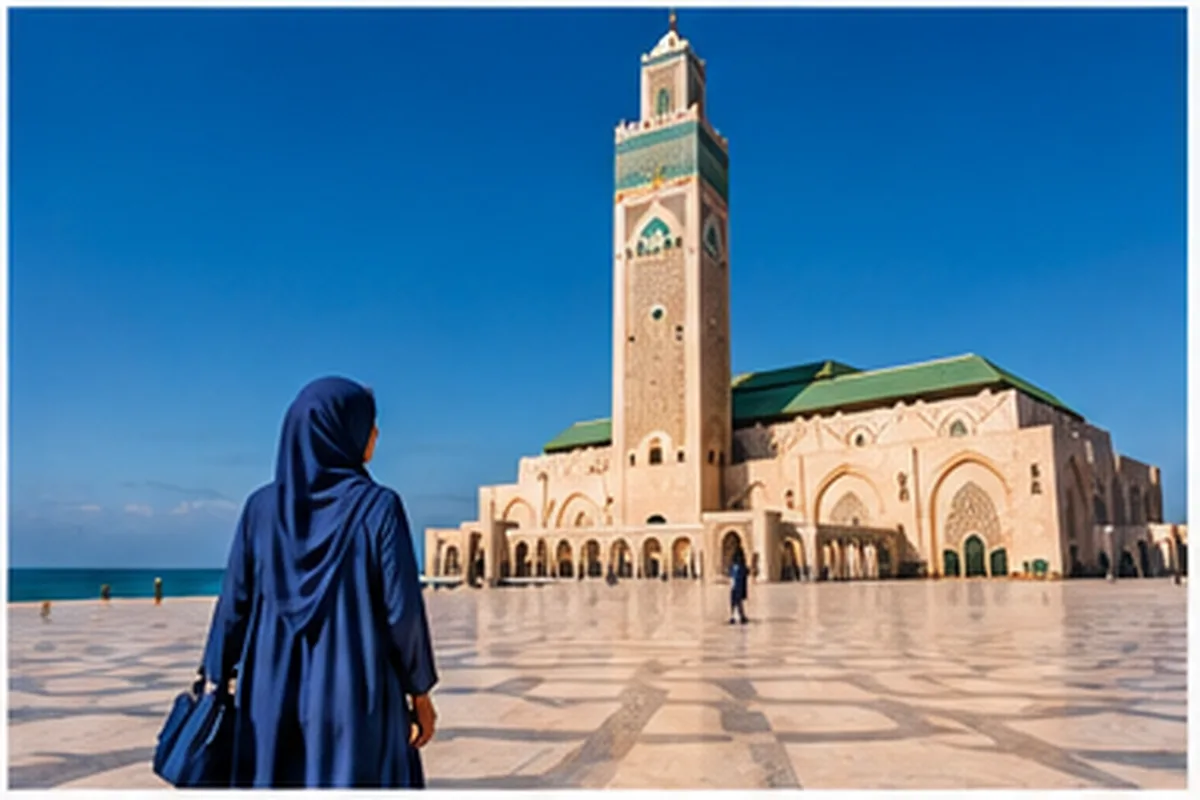
A country shaped by Islam
Mauritania is officially an Islamic republic, and nearly the whole population is Muslim. Religion is part of ordinary conversation, greetings and the working day, and the Maliki school is the tradition most associated with the country.
The Adrar caravan towns of Chinguetti and Ouadane grew up on trans-Saharan routes and are known as centres of learning. Chinguetti is described as an ancient oasis town, and its old libraries are a reason many travellers visit.
Before you go: entry and advice
Read your own government's current travel advice, since regional security can vary and some areas are restricted. Visa and health requirements are set by Mauritanian authorities and change, so confirm them through an embassy rather than a blog post.
Keep passport copies, and be prepared for police checkpoints on main roads. Travelling with a local company that knows the permits and routes simplifies this considerably.
Allow extra time at borders and airports, and carry some local currency, the ouguiya, for small expenses on arrival.
Mosques and prayer
Calls to prayer are heard across Nouakchott and the oasis towns. Visitors who pray will find mosques in every settlement, and desert guides are used to stopping for the prayer, often on a clean patch of sand.
Carry a prayer app with offline qibla and times, because mobile coverage fades outside the towns. Non-Muslim companions should ask before entering any mosque, since access rules differ. Where scholars differ on shortening and joining prayers while travelling, each traveller follows their own scholar.
Food, drink and halal expectations
Alcohol is prohibited in the country, and meat in local kitchens is expected to come from animals slaughtered according to Islamic practice. Formal halal labels and certificates are not the norm, because the question rarely arises in a society where it is assumed.
Typical meals centre on rice with fish or lamb, with camel meat and milk common in the interior. Fresh fish is part of coastal life around Nouakchott's fishing harbour. Tea is served in several small glasses, and declining it altogether can seem curt.
Dress and etiquette
Modest dress is the rule for everyone. Women do well to cover shoulders, arms and legs and carry a scarf, while men should avoid shorts in towns. Local women often wear a colourful melhfa, and visitors are not expected to copy it.
Greet people properly before asking for anything, use the right hand for eating and giving, and ask before taking photographs of people. Public displays of affection between couples are discouraged.
Getting around
Distances are long and roads outside the main axes are rough. Tour companies commonly use four-wheel-drive vehicles with a driver, and ChingiTours, a company for Mauritania, Senegal and Gambia, offers everything from a one-day Nouakchott city tour to 14-day desert and oasis journeys.
Fuel, water and a spare vehicle matter more than speed. For the Banc d'Arguin National Park, the official site lists a visitor section and regulations, which should be read before planning a stay.
Safety, scams and good sense
Agree prices for guides, vehicles and camel rides before departure, and ask what is included. Be wary of unlicensed fixers offering permits or low prices without paperwork.
Carry cash in small notes, protect your phone in sand and heat, and keep to the route your guide advises. A written itinerary left with someone at home is a sensible habit.
Ramadan and holidays
In Ramadan, daytime life slows, restaurants may be closed until the evening and eating in public is discouraged. Evenings are warm and social, and sharing dates and milk at sunset is a lovely way to meet hosts.
Eid al-Fitr and Eid al-Adha are family holidays, with shops closed and transport busy. As dates follow the lunar calendar, confirm them locally.
Frequently asked questions
Is Mauritania easy for Muslim travellers?
Prayer, halal eating and modest dress are all natural in a country that is officially an Islamic republic. The challenges are distance, desert roads and permits, which is why most visitors travel with a local company.
Do restaurants in Mauritania have halal certificates?
Certificates are not typical, since meat is expected to be slaughtered in line with Islamic rules. Alcohol is prohibited. If provenance matters to you, ask the host or guide, particularly in hotels catering to foreigners.
What should women wear?
Cover shoulders, arms and legs, with loose fabric that suits the heat, and keep a scarf for mosques and villages. Visitors are not expected to wear local dress, but modesty is appreciated.
When is the best season to visit?
The cooler months suit desert travel best, while the summer is very hot inland. Check dates against Ramadan, and for the Banc d'Arguin read the park's own visitor guidance before choosing your trip.
Useful organisations and links
- Parc National du Banc d'Arguin (PNBA)Official site of the UNESCO-listed national park, with visitor information, regulations and details about the Imraguen community.
- ChingiToursTravel company for Mauritania, Senegal and Gambia, offering city tours and desert or oasis journeys with local guides.
Links to third-party organisations with no commercial tie to this site. Always check conditions with them directly.