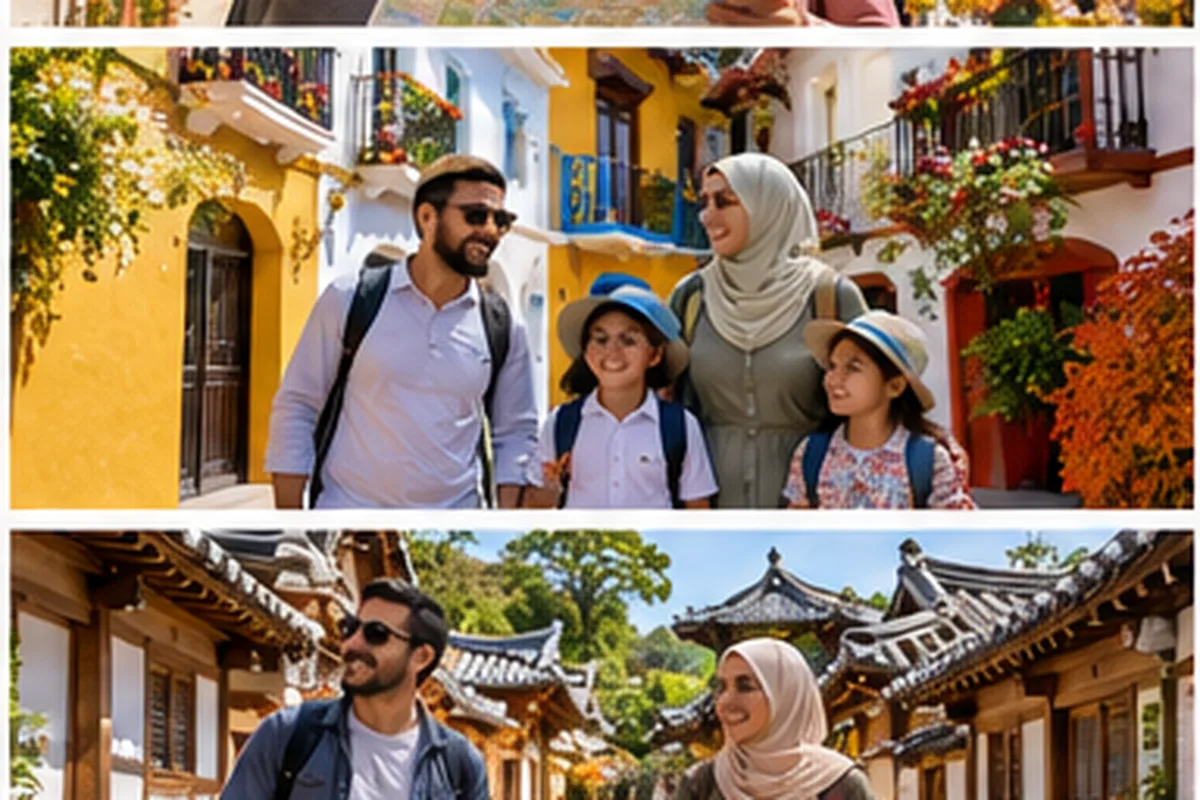
Spain through a Muslim traveller's eyes
For about eight centuries much of the Iberian Peninsula was part of Al-Andalus, and the legacy shows in architecture, place names, gardens and everyday words. Many visitors come precisely for that, while others simply want sun, good food and easy family travel.
Catholicism has shaped the country's culture, and pork is central to traditional cooking. That does not make a halal holiday difficult, but it does mean that meals and prayer need a little more thought than in a Muslim-majority destination.
When to go
Spring and autumn are the most comfortable seasons for city sightseeing, especially in the south, where summer afternoons are fierce. July and August suit the coast but are crowded and hot in Seville, Córdoba and Granada.
Winter brings mild days on the southern coast and cold ones in Madrid and the north. Short winter days also make it easier to keep the daytime prayers on schedule while sightseeing, whereas summer evenings stay light very late.
Andalusia: the heritage heartland
Granada has the Alhambra and the Generalife gardens. Córdoba has the former great mosque, now a cathedral, with its forest of arches. Seville has the Giralda, once a minaret, and a labyrinth of old streets. Andalusia's official tourism site also points to Arab baths among the region's heritage.
Book timed tickets for the Alhambra well ahead and use official sales sites rather than resellers. Inside the Córdoba monument, visitor rules apply, and communal Muslim prayer is not part of the programme there, so read the official rules before you go.
Madrid, Barcelona and the coast
Madrid and Barcelona have large and varied Muslim communities, and with them mosques, halal butchers and restaurants serving Moroccan, Turkish, Pakistani and Middle Eastern food. Both are good bases for families who like museums, parks and easy public transport.
The Mediterranean and Atlantic coasts suit beach holidays. Beaches are mixed and swimwear is relaxed, so families who prefer more privacy often choose smaller coves, early mornings or hotels with a quiet pool.
Eating without pork and alcohol
Menus often include pork in unexpected places, such as broths, beans and cured ham garnishes. Seafood, eggs, vegetable dishes, grilled fish and rice are easier choices when no halal restaurant is nearby.
In larger cities, halal butchers and restaurants are listed on map apps, though quality varies and certification is not always visible. Spain has Instituto Halal and the Comisión Islámica de España working on certification, so ask for a certificate if it matters, and read the product label in supermarkets.
- Ask politely whether dishes contain pork, lard or alcohol, and whether the fryer is shared.
- Carry snacks for long travel days and rural stops.
- Look for self-catering rentals with a kitchen if you want to cook.
Prayer and daily rhythm
Mosques exist in most large cities, but they are fewer than in Muslim countries, so plan around them rather than counting on one at every turn. Prayer apps, a pocket mat and a compass make quiet corners, parks and hotel rooms workable.
Shops often close in the afternoon in smaller towns, and restaurants serve dinner late, usually after nine in the evening. Both habits affect when families eat and pray.
Moving around by train
Renfe, the national rail operator, sells AVE and low-cost Avlo high-speed tickets and offers onboard dining, which most Muslim travellers will treat with caution, so bring your own food. Trains link Madrid with Córdoba, Seville and Málaga, making a cultural route simple without a car.
Cars help for coastal holidays and villages. Book rail tickets early for lower fares, and check station facilities on the way.
An eight-day sample route and Ramadan
Days one to three: Madrid, with museums, a park and a halal dinner. Day four: train to Córdoba for the monument and old quarter. Days five and six: Seville. Days seven and eight: Granada for the Alhambra, then a flight or train home.
If Ramadan falls in a hot summer, fasting hours are long and southern afternoons are punishing. Winter Ramadans are easier for sightseeing. Look for iftar options in cities with large Muslim communities and keep dates and meals simple.
Frequently asked questions
Is Spain easy for a halal holiday?
It is manageable with preparation. Large cities have halal butchers and restaurants and many mosques, while smaller towns offer fewer choices. Seafood, vegetables and self-catering fill the gaps, and asking about pork and alcohol becomes routine.
Can Muslims pray inside the Córdoba Mosque-Cathedral?
The building operates as a cathedral and visitor rules apply, so communal Muslim prayer is not part of a normal visit. Check the official site for the current rules and hours before planning your day.
Which cities are best for a first trip?
Madrid for a base with strong rail links and a large Muslim community, then Córdoba, Seville and Granada for Al-Andalus heritage. Barcelona and the coast suit families who prefer beaches and city life.
How do I find halal food in Spain?
Use map apps for halal butchers and restaurants, ask whether certification exists, read supermarket labels and choose fish or vegetable dishes when unsure. Self-catering apartments make it easier to control ingredients.
Useful organisations and links
- Spain.infoSpain's official tourism portal with destinations, routes, culture, visa information and advice on getting around.
- RenfeSpain's national rail operator: AVE and Avlo high-speed tickets, regional trains and information on onboard dining.
Links to third-party organisations with no commercial tie to this site. Always check conditions with them directly.