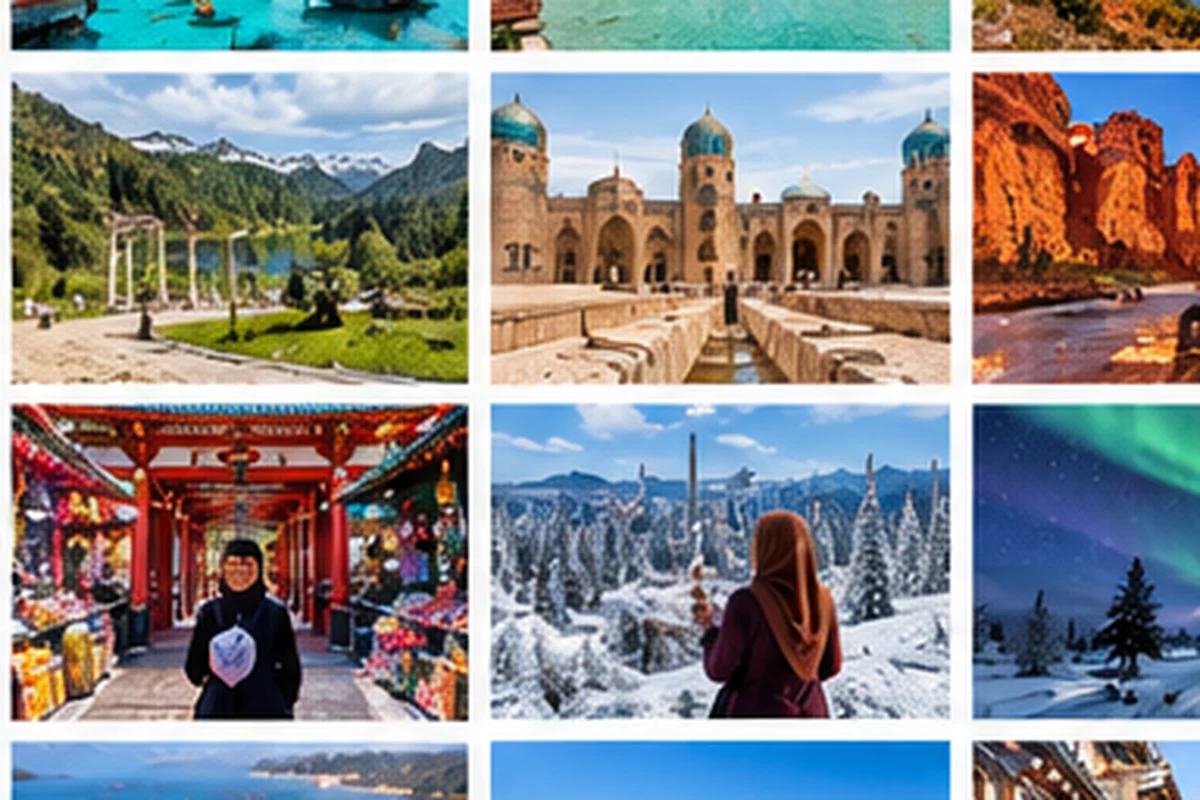
Heritage travel versus religious travel
Heritage travel centres on culture and history. A visitor might be a practising Muslim, a student of architecture or a curious traveller, and the same palace or museum serves all three. This differs from pilgrimage or mosque-centred journeys, which have their own pages.
Because many heritage sites are managed as museums or monuments, prayer is often not part of the visit. Plan prayer breaks around the site, not within it, unless the official information says otherwise.
Granada and the Alhambra
The Alhambra and Generalife, Granada's Nasrid palace complex, are run by the Patronato de la Alhambra y Generalife. Its official website sells tickets and offers audioguides, plus accessibility information and practical visit planning.
Book through the official site and read the timed-entry details carefully. Wear comfortable shoes for the uneven paths and allow generous time for the palaces and gardens.
A day in Granada works best when the monument visit is booked for a time that suits the family. Early slots avoid the heat in summer, and the old quarter nearby has plenty of places to rest between the palaces and the evening.
Córdoba: Mezquita and Medina Azahara
Córdoba's tourism site points to the Mezquita-Catedral and Medina Azahara as World Heritage sites. The Mosque-Cathedral has a visitor reception centre at Patio de San Eulogio and has published visit rules, which are worth reading before you go.
Spend at least a half day in the monument and use the rest of the day for the old quarter. Remember that the building functions as a cathedral, so behaviour and dress are expected to be respectful.
A note on halal food in Andalusia
The fetched official pages do not describe halal dining, so check restaurants individually, or use the regional halal tourism guide published by Turespaña and Turismo Andaluz.
Museums of Islamic art and culture
Not every heritage journey needs a plane to a historic city. The Institut du monde arabe in Paris combines a museum of Arab and Islamic civilisation with exhibitions, Arabic language courses, a library and restaurants.
In Toronto, the Aga Khan Museum presents Islamic arts and Muslim cultures through exhibitions, performances and workshops, with an on-site restaurant called Diwan. Neither site's pages state prayer space or halal details, so contact the museum before visiting if these matter.
Reading what you see
Heritage becomes richer with a few basic ideas. Geometric patterns, arabesque and calligraphy are the main decorative languages of Islamic art, and courtyards, fountains and gardens reflect ideas of shade, water and privacy.
Audioguides, guided tours and museum workshops help decode inscriptions and symbols. A short book or lecture beforehand makes the first view more rewarding.
Spend a few minutes at each site simply looking: how light enters, where water runs and how inscriptions frame doorways. Notes or a sketchbook slow the pace, and often reveal more than a quick photograph.
Organising prayer and meals around visits
Heritage days are long, so build in rests. Check prayer times before leaving the hotel, plan lunch near the site, and identify the nearest mosque or prayer room on a map.
Where official sites are silent on halal food, ask your hotel, local Muslim organisations or recent travellers. Do not assume a restaurant is halal from its cuisine alone.
- Carry a small mat and a bottle for wudu
- Save the address of a nearby mosque offline
- Book timed tickets so the day follows prayer times
- Pack snacks for queues and long walks
A sample three-stop plan
A compact Andalusian trip might pair Granada and Córdoba, giving two days to each, with a rest day between. Travellers in Europe's cities can build a long weekend around a museum such as the one in Paris, adding walks through Arab and Muslim quarters.
Whatever the route, reserve tickets early for popular monuments, travel in the quieter hours, and keep an hour free each day for tea, reflection or notes.
Travelling with children and students
Heritage sites suit families with older children, and many museums run workshops for young visitors. Choose activities with a hands-on element, such as calligraphy or tile design, to keep attention high.
For school groups and study tours, contact the museum's education team well ahead. Ask about group rates, guided tours and whether a quiet room is available for a short prayer break.
After the trip, a short written note of favourite places helps friends planning their own route, and gives you a starting list for the next journey.
Frequently asked questions
Do I need tickets in advance for the Alhambra?
The Patronato de la Alhambra y Generalife sells tickets through its official site. Entry is regulated, so check availability well before travel and book only from the official source. Opening hours and rules can change, so confirm them on the site.
Can I pray inside historic monuments?
It depends on each monument's status and rules. The Córdoba Mosque-Cathedral, for instance, is run by its Cathedral Chapter and publishes visit rules. Check the official site first and plan prayer at a nearby mosque or prayer room.
Are Islamic art museums worth visiting if I am not an expert?
Yes. Museums such as the Institut du monde arabe and the Aga Khan Museum offer exhibitions, workshops and learning programmes aimed at general visitors. Guided tours and audioguides help beginners follow the stories behind the objects.
How do I find halal food near heritage sites?
Official heritage sites rarely list restaurants. Use regional halal guides, ask your hotel and read recent reviews, then confirm with the restaurant how it sources its meat. Ask what it means by halal rather than assuming.
Useful organisations and links
- Patronato de la Alhambra y GeneralifeOfficial body of Granada's Nasrid palace complex: tickets, hours, audioguides and accessibility information.
- Institut du monde arabeParis institution with a museum of Arab and Islamic civilisation, exhibitions, Arabic courses and a library.
- Aga Khan MuseumToronto museum of Islamic arts and Muslim cultures with exhibitions, performances, workshops and a restaurant.
Links to third-party organisations with no commercial tie to this site. Always check conditions with them directly.