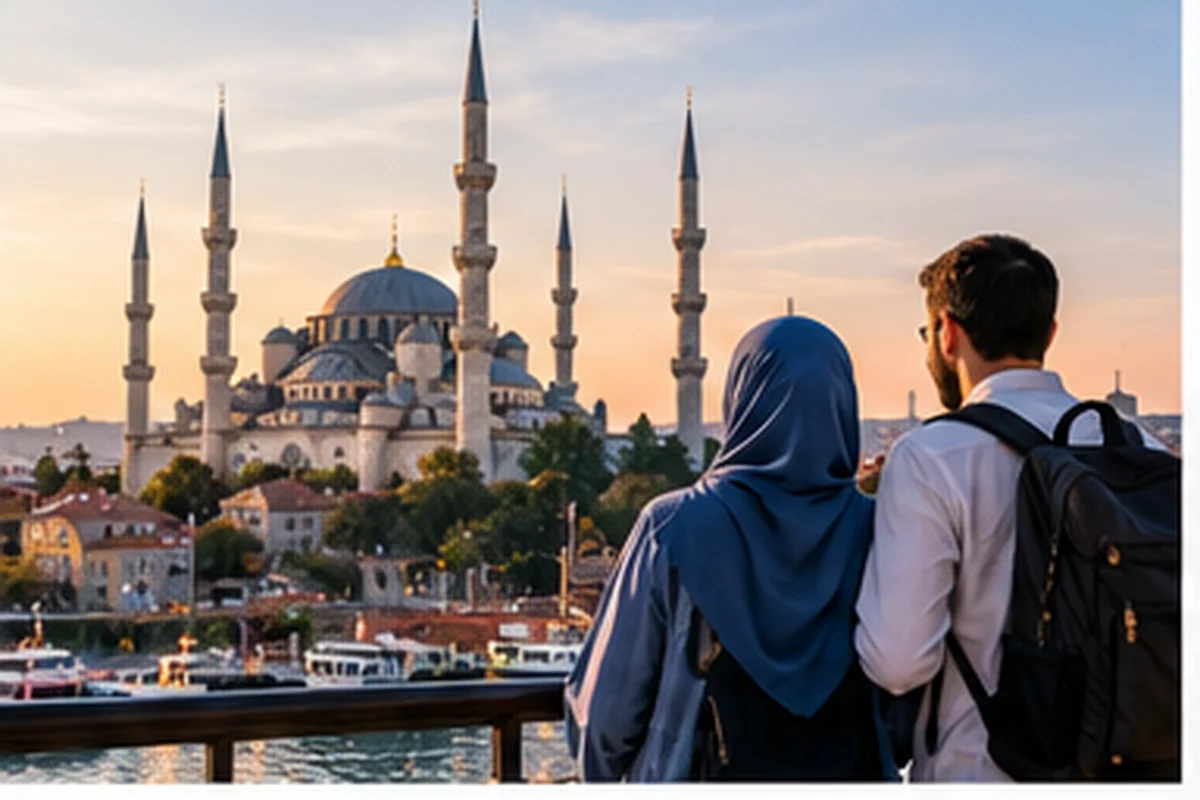
What the term really covers
There is no single definition of halal travel. For one family it means eating only certified meat and sleeping in an alcohol-free hotel. For another it simply means a quiet corner for prayer and a menu with vegetarian or seafood choices.
Most travellers fall somewhere between those two poles. The useful first step is to write down your own non-negotiables, then separate them from the things you would like but can live without.
Halal and Muslim-friendly are not the same thing
Halal refers to what is permitted under Islamic law, and in travel it is mostly applied to food, drink and sometimes finance. Muslim-friendly is a broader, softer term used by hotels, airlines and tourist boards to say that Muslim guests' needs have been thought about.
A Muslim-friendly hotel may offer a prayer mat, a qibla indicator and halal breakfast options without being fully alcohol-free. Always read the specific list of services rather than assuming the label covers everything.
Treat these as two ends of a spectrum rather than rival standards. A restaurant can be fully halal without calling itself Muslim-friendly, and a resort can advertise Muslim-friendly services while serving alcohol in its bars.
Food: certificates, kitchens and common sense
Certification systems differ from country to country. Singapore's Islamic religious council, MUIS, runs a halal certification scheme and keeps a list of certified eating establishments, which is a useful model of what a transparent system looks like.
Where no national system exists, ask who supervises the kitchen, where the meat comes from and whether pork or alcohol is used in cooking. Scholars and travellers differ on how strict to be when halal options are unavailable, so each reader should follow their own school or scholar.
- Ask for the certificate and check the issuing body and the date.
- Look for seafood, vegetarian and fruit-based options when certainty is low.
- Self-catering with a market and a kettle is a perfectly valid halal strategy.
Lodging that respects your routine
Hotels interpret Muslim-friendly in different ways. Malaysia's Islamic Tourism Centre, part of the Ministry of Tourism, Arts and Culture, runs a recognition scheme for Muslim-friendly accommodation and a certification for Muslim-friendly tour guides, which shows how a government can set criteria.
Typical features worth asking about include a qibla marker in the room, prayer mats, a prayer space, halal food at breakfast, family rooms and privacy for women in pool or spa areas. Request these in writing before paying a deposit.
Prayer on the road
Five daily prayers can be kept almost anywhere with a little preparation. Download prayer times for your destination, carry a compass or qibla app, and note the nearest mosque to your hotel and main sights.
Airports, large shopping centres and many tourist sites now provide prayer rooms, though quality varies. When no space exists, a clean, quiet corner is commonly used, and many scholars permit combining or shortening prayers while travelling; ask your own scholar what applies to your situation.
Choosing a destination
Muslim-majority countries make daily life easier, because halal food is the default and the call to prayer shapes the day. Morocco, with its national tourist office site Visit Morocco, offers cities, coast, desert and mountains within a single country.
Non-Muslim countries can still work very well if you plan around cities with established Muslim communities, halal restaurants and mosques. Research the destination's customs and its entry rules before you commit.
A simple planning routine
Work in order: destination and dates, flights or transport, lodging, then food and prayer logistics. Leave the day-by-day itinerary until the fixed points are settled.
Keep screenshots of confirmations, certificates and email promises so that staff can see what was agreed when you arrive. A polite, specific request at check-in is almost always better received than a complaint later.
A short checklist helps: confirm the dates, ask the three or four questions that matter most to you, and save every reply. That small habit turns a vague promise into something you can point to if plans change.
Mistakes that spoil trips
The commonest error is trusting a single word on a website. A page that says halal without naming a certifier, or Muslim-friendly without listing facilities, tells you very little.
Another is planning an overpacked itinerary that leaves no time for prayer or for a proper meal. Build gaps into each day, especially during Ramadan or when travelling with children and older relatives.
A third mistake is assuming that rules are the same everywhere. Entry formalities, dress expectations and halal labelling differ widely, so read the official guidance for each country you plan to visit.
Frequently asked questions
Is halal travel only for Muslim-majority countries?
No. Many Muslims travel to Europe, East Asia and the Americas with careful preparation. The key is researching halal food, prayer spaces and mosques in advance, and choosing cities where these services are easy to find.
How can I tell if a hotel is genuinely Muslim-friendly?
Ask for a written list of services: prayer mats, qibla direction, halal kitchen, alcohol policy, family rooms and pool arrangements. Request the name of any certifier and check it. Vague wording without detail is a signal to ask more questions.
Do I have to eat only certified halal food while travelling?
Practice varies. Some travellers accept only certified meat, while others eat seafood and vegetarian meals when certification is unavailable. Scholars differ on this question, so follow the guidance of your own school or scholar.
Does this site book trips or certify halal services?
No. This portal is an independent information guide. It does not sell trips, take bookings or issue halal certification, so always confirm details directly with the hotel, airline, restaurant or certifying body.
Useful organisations and links
- Islamic Tourism Centre MalaysiaGovernment centre behind Muslim-friendly accommodation recognition and tour-guide certification in Malaysia; useful for seeing what criteria look like.
- MUIS Halal (Singapore)Singapore's Islamic council explains halal certification and lists certified eating establishments.
- Visit Morocco (ONMT)Official site of the Moroccan National Tourist Office for planning cities and itineraries.
Links to third-party organisations with no commercial tie to this site. Always check conditions with them directly.