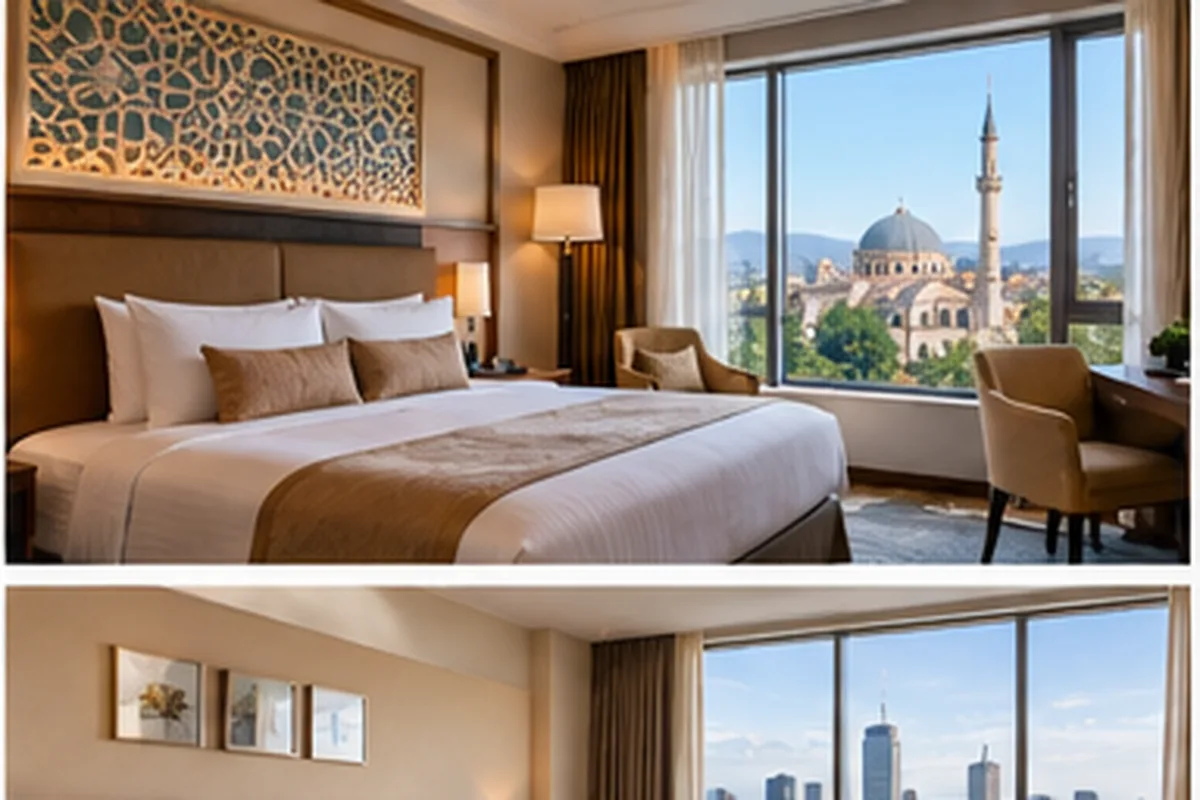
A small Muslim community and a large hotel market
South Korea is a mostly non-Muslim country with a modest Muslim community made up of Korean converts and residents and workers from many countries. Hotels range from international chains and business towers to small guesthouses, traditional hanok stays and capsule-style lodging.
Because the community is small, hotel staff are not always familiar with requests such as a qibla direction or halal food. That is rarely a sign of ill will. It usually means that you need to explain clearly what you need, and ideally in writing, before you arrive.
What ‘Muslim-friendly’ can mean in practice
No single definition applies. A hotel may call itself welcoming to Muslim guests while offering only one or two of the features below, so treat the phrase as a starting point for questions rather than an answer.
It helps to decide in advance which items are essential.
- A qibla direction marked in the room, or a willingness to tell you the direction on request
- A prayer mat and a copy of the Quran available to borrow
- A quiet space that can be used for prayer, if no dedicated prayer room exists
- Breakfast with clearly labelled ingredients, or a fridge and kettle so you can prepare your own food
- Family rooms and connecting rooms
- Access to a spa or pool at times that suit women or families, where the hotel offers it
Halal food at the hotel: be specific
Korean cooking uses pork, seafood-based stocks and sauces, and alcohol in many dishes, and these are often invisible on a menu. A hotel restaurant that is simply ‘pork-free’ is not the same as one with a halal kitchen, and a buffet can mix utensils and surfaces.
Ask exactly what the kitchen can and cannot do. If the answer is vague, plan to eat breakfast outside, choose a room with a small kitchen, or rely on packaged food and certified products you recognise. The Korea Muslim Federation links to separate halal certification pages, which can help you understand what a certificate on a product or restaurant door refers to.
Where to stay: areas and property types
Seoul is the easiest base because the Seoul Central Mosque, run by the Korea Muslim Federation, sits in the city, and many travellers choose a hotel within a reasonable ride of it. Look at the map before booking rather than relying on the neighbourhood name.
Outside the capital, choices are thinner, and prayer places may be far away. For Busan, Jeju or smaller cities, ask the hotel about the nearest mosque or prayer space, and check the federation’s list of branch mosques for current details.
Large international hotels
Big hotels tend to have more staff, more languages and more flexibility with requests, and some can arrange a quiet room or a prayer mat. The trade-off is that food is rarely halal unless the hotel states otherwise.
Guesthouses and hanok stays
Small properties allow a personal conversation with the owner, which can make a request easier to fulfil. Facilities are simpler, and floor sleeping in traditional rooms is worth knowing about if you have mobility concerns.
How to verify before you book
Send a short message to the hotel and keep the reply. A clear and specific answer is a good sign; a copy-and-paste reply that ignores your questions is not.
Use the questions below, and ask for photos where it makes sense.
- Is there a prayer mat and Quran on request, and can staff confirm the qibla direction?
- Is the breakfast or restaurant halal, or only free of pork, and who confirms this?
- Can the kitchen show a halal certificate, and what does it cover?
- Are family or connecting rooms available, and are gender-separated spa times offered?
- What is the nearest mosque, and how do guests usually get there?
Red flags and common misunderstandings
Be cautious when a booking site shows a ‘halal’ filter or badge with no explanation, when the hotel cannot say who certified its food, or when a claim appears only in a review. Reviews are useful, but they describe one guest’s experience on one date.
Asking the same question in a different way, or asking for the answer in writing, often reveals the real situation.
Booking terms and arrival
Choose a cancellation policy that lets you change plans if the hotel cannot meet an essential need. Rates with free cancellation cost more but protect you when a promise turns out to be loose.
On arrival, confirm the points you asked about at the desk. If the room has no qibla marking, a compass app or a question to reception settles it quickly. The official VISITKOREA site has a Muslim-friendly Travel theme, which is a useful first stop for planning, although it does not replace checking each property yourself.
Frequently asked questions
Are there halal-certified hotels in South Korea?
A few properties may hold certification for their kitchens, but certification is not common among hotels. Do not assume any hotel is halal because of its brand or location. Ask what is certified, by whom, and whether it is current.
How can I find the qibla direction in a Korean hotel room?
Ask reception when you book or when you arrive, since staff may not know it offhand. A compass or qibla app on your phone is a reliable backup. Some hotels will lend a prayer mat if asked in advance.
Is a pork-free breakfast the same as halal?
No. Pork-free means pork is not served, but the food may still contain alcohol in sauces, or share surfaces and utensils with non-halal items. Many travellers consider halal a separate question and decide for themselves, following their own scholar.
Where can I find prayer times and mosques?
The Korea Muslim Federation, which runs Seoul Central Mosque, publishes prayer timetables and a list of branch mosques around the country. Check it before travelling, and confirm opening hours directly if you plan to visit.
Useful organisations and links
- VISITKOREA – Korea Tourism OrganizationOfficial national tourism site, with a Muslim-friendly Travel theme among its things to do.
- Korea Muslim Federation (Seoul Central Mosque)Runs Seoul Central Mosque; publishes prayer timetables, a list of branch mosques and links to halal certification pages.
Links to third-party organisations with no commercial tie to this site. Always check conditions with them directly.